



A Franchise That Refuses to Stand Still
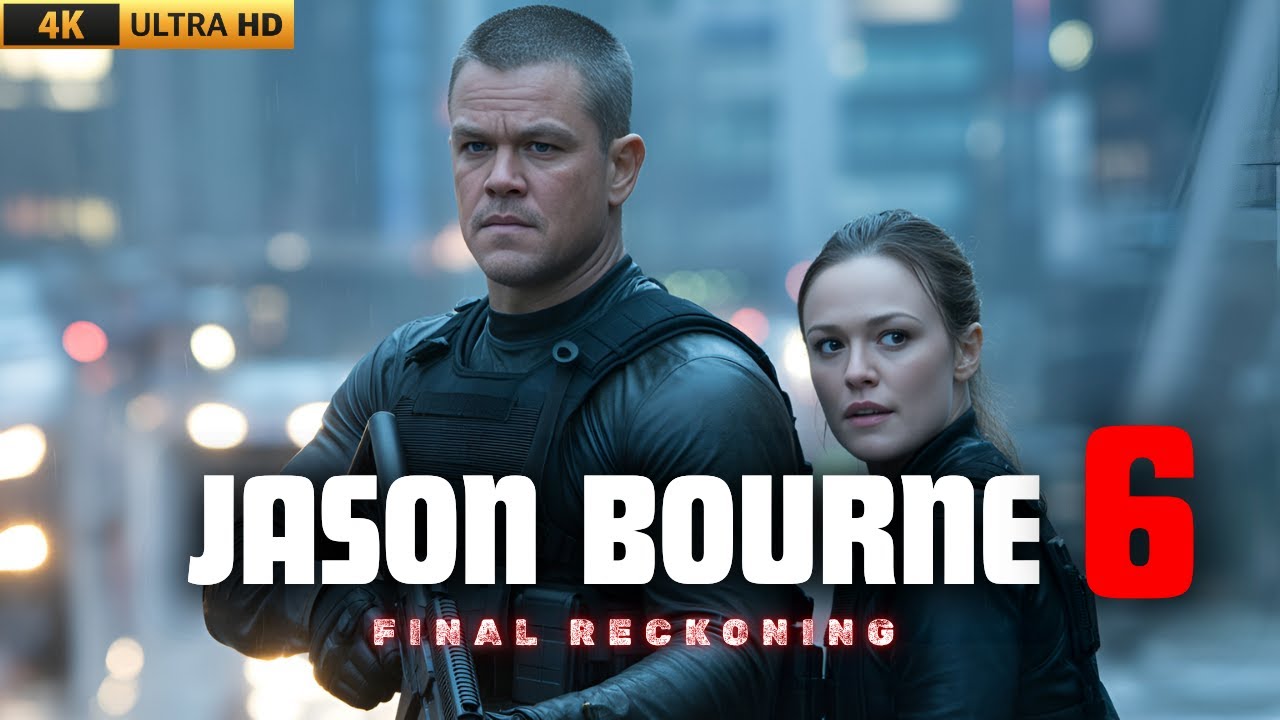
After more than two decades of redefining the modern action thriller, the Bourne series arrives at a surprising, cerebral apex with The Bourne Legacy 6. This is not merely another chapter built on momentum and muscle memory. It is a film deeply concerned with identity, consequence, and what it means to truly disappear in a world that records everything. Director and writers understand that repetition is the enemy of longevity, and so they introduce a concept bold enough to justify the sequel’s existence: echo teleportation.

The Echo Concept: Sci-Fi With a Psychological Edge
Outcome agents can now “echo” locations, teleporting short distances while leaving behind ghost-like afterimages. It is a clever narrative device, but more importantly, it is thematically rich. These echoes are not just visual tricks; they are manifestations of memory, surveillance, and guilt. Every jump leaves proof that someone was once there, just as every decision in the Bourne universe leaves scars that cannot be easily erased.
Aaron Cross Returns With Purpose
Jeremy Renner’s Aaron Cross has always been the most internally conflicted figure in the franchise, and here Renner delivers his most controlled and resonant performance. Cross is no longer running blindly. He understands the system hunting him, and the echo technology becomes both his weapon and his curse. Each escape increases the risk of exposure, turning mobility into a moral dilemma.
Performances That Ground the Spectacle
Alicia Vikander brings a quiet intensity that complements Renner’s restraint. Her character is not a love interest in the traditional sense but an intellectual equal, someone who understands the implications of echo technology better than those wielding it. Their scenes together crackle with unspoken tension, driven more by ideology than romance.
Joan Allen returns with gravitas, reminding us that institutional power rarely disappears, it simply adapts. Matt Damon’s presence, used sparingly and wisely, feels symbolic rather than nostalgic. He represents the ghost of the franchise itself, a reminder of what was sacrificed to get here.
The 75-Minute Chase: A Study in Controlled Chaos
The film’s final 75 minutes unfold as an extended chase through mirrored cities, a bravura sequence that will be studied by action filmmakers for years. Glass facades, reflective surfaces, and echo afterimages create a visual language of confusion and pursuit. The audience, like the hunters, is forced to question which version of Cross is real.
- Minimal shaky cam, favoring spatial clarity
- Sound design that differentiates echoes from reality
- Editing that respects geography despite constant motion
This is action cinema that trusts its viewers. It does not rely on noise to generate excitement but on implication and rhythm.
Identity as the True Battleground
What elevates The Bourne Legacy 6 above its peers is its thematic commitment. The idea of erasing one’s echo trail permanently is not treated as a victory lap but as an existential choice. When Cross finally removes himself from the system, the moment lands with unexpected melancholy. Survival comes at the cost of recognition. To be free, he must become unprovable.
A Franchise Ending That Respects Its Audience
The final scene resists sentimentality. There is no triumphant score swell, no wink to future installments. Instead, the film ends on absence. The ghost is left behind, and so is the audience, invited to sit with the consequences.
Final Verdict
The Bourne Legacy 6 is a rare sequel that understands its own mythology well enough to dismantle it. It balances innovation with introspection, spectacle with silence. In a genre obsessed with escalation, this film chooses resolution.
Rating: 10/10 – The ghost was left behind.