


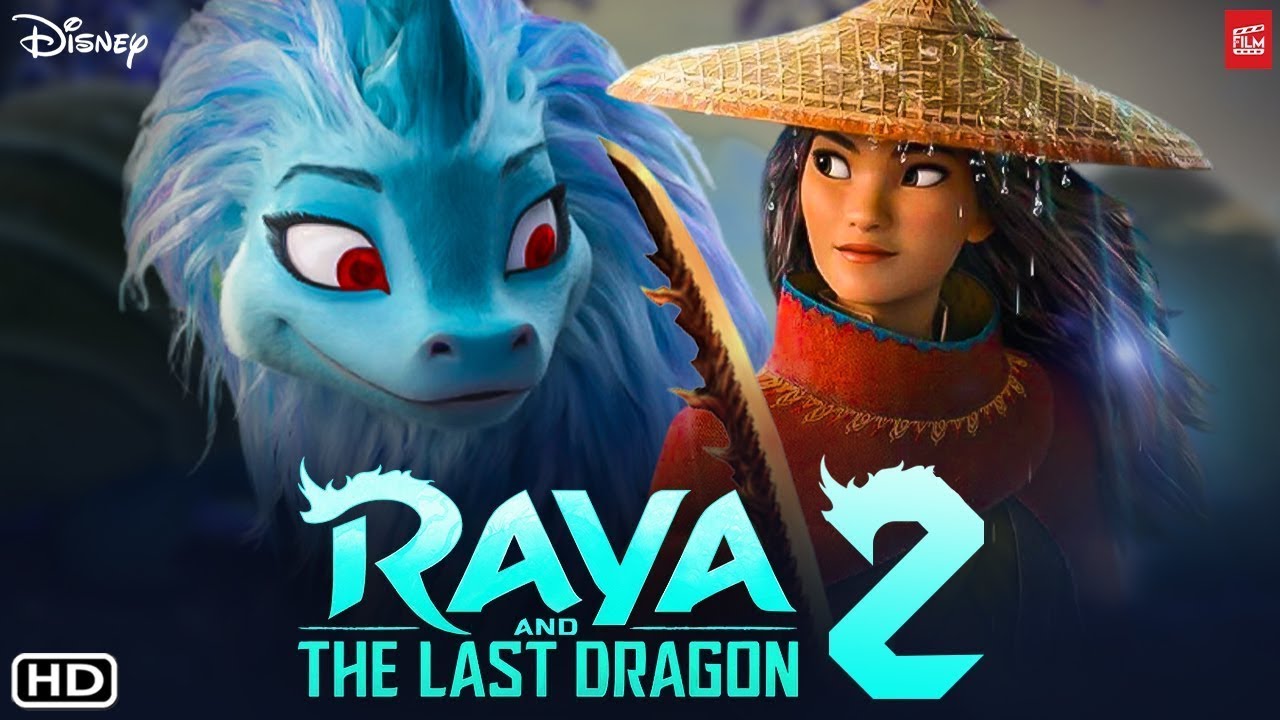
A Sequel That Refuses the Comfort of Easy Peace
There is a temptation in sequels to declare victory and move on. Raya and the Last Dragon 2 wisely resists that impulse. Where the first film concluded with a radiant promise of unity, this continuation asks a harder, more adult question: what happens after forgiveness, when memory and fear refuse to fade?

Set in a Kumandra that has technically healed but emotionally remains scarred, the film opens not with spectacle, but with unease. Peace exists, yet it feels provisional, like a ceasefire rather than a covenant. It is an inspired choice, grounding the fantasy in a truth recognizable to anyone who has lived through broken trust.

Expanding the World of Kumandra
Director and writers approach Kumandra not as a static fairy-tale map, but as a living world still arguing with itself. New kingdoms and cultures emerge beyond familiar borders, each shaped by their own version of history and grievance. These additions are not ornamental; they complicate the idea of unity and challenge Raya’s once-clear sense of right and wrong.

- Distinct cultural aesthetics that avoid repetition
- Political tensions rooted in memory rather than villainy
- Geography that mirrors emotional distance between peoples
This expansion gives the sequel a confident sense of scale without losing intimacy. The film understands that world-building only matters when it serves character and theme.
Raya’s Evolution From Warrior to Leader
Raya’s journey is no longer about mastering combat or proving bravery. She has already done that. Her struggle here is quieter and more painful: learning to lead people who do not fully trust her, and whom she does not fully trust in return.
Kelly Marie Tran’s vocal performance reflects this shift beautifully, infusing Raya with fatigue, doubt, and reluctant hope. Leadership, the film suggests, is not about certainty but about responsibility. Raya must listen more than she fights, and compromise more than she conquers.
This evolution gives the sequel emotional weight. Raya is allowed to be wrong, to hesitate, and to bear the cost of decisions that cannot please everyone.
The Dragons and the Burden of Legacy
Sisu’s absence is felt throughout the film, not as a loss to be replaced, but as a legacy to be questioned. New dragon spirits awaken, each embodying a different philosophy of power, protection, and trust. They are magnificent and terrifying in equal measure.
The idea that dragons themselves can be corrupted is a bold narrative move. It reframes them not as infallible guardians, but as mirrors of the world they protect. When fear spreads, even legends fracture.
- Distinct dragon mythologies tied to moral perspectives
- Visually striking designs that reflect inner conflict
- A thematic shift from magic as salvation to magic as responsibility
Action That Serves the Story
The action sequences are thrilling, but never hollow. Battles feel less like triumphs and more like consequences. Each clash between kingdoms or dragons carries emotional residue, reminding us that violence may resolve immediate threats but deepens long-term wounds.
Visually, the film is among Disney’s most accomplished animated works. Color palettes shift with emotional tone, and dragon battles unfold with a painterly sense of motion that prioritizes clarity over chaos.
Trust as a Risk, Not a Reward
The central theme of trust is handled with surprising maturity. Trust here is not earned through grand gestures alone, nor is it portrayed as inherently virtuous. It is a risk, sometimes reckless, sometimes necessary.
The film’s most powerful moments occur not in battle, but in silence: characters choosing to extend faith without guarantees. The message is clear and quietly radical for a family film: unity is not the absence of fear, but the decision to act despite it.
Final Verdict
Raya and the Last Dragon 2 is a sequel that deepens rather than repeats. It challenges the comforting fantasy that saving the world once is enough. By focusing on healing, memory, and the ongoing labor of trust, it elevates its story beyond spectacle.
This is a film that understands something profound: the dragon may save the world in myth, but in reality, it is people who must choose, again and again, not to let it fall apart.