



An Ambitious Vision for the Franchise’s Next Gear
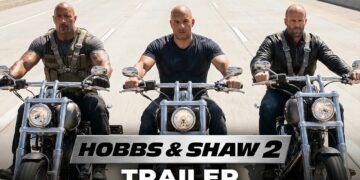
Fast & Furious 11 arrives not as a finished film but as a bold fan-made cinematic trailer, imagining a future chapter where the franchise leans fully into its own mythmaking. After more than two decades of escalating stunts and ever-expanding casts, this concept asks a provocative question: what happens when the idea of speed collides with the discipline of a global sports icon? The answer, at least in this imagined form, is a saga that trades subtlety for spectacle and finds unexpected poetry in excess.

Dom Toretto and the Gravity of Legacy
Vin Diesel’s Dominic Toretto remains the emotional anchor. Over the years, Dom has become less a character than a principle: loyalty, family, and unyielding resolve. In this envisioned installment, he stands at a crossroads, no longer just protecting his inner circle but defending a legacy built on improbable survival. The trailer frames Dom not as a reckless speed demon, but as a general weighing the cost of one more war.

This reframing is effective. It acknowledges franchise fatigue while doubling down on what still works. Dom’s gravity grounds even the most outlandish set pieces, reminding us why audiences continue to show up.

Cristiano Ronaldo as Precision Incarnate
The headline attraction is the imagined introduction of Cristiano Ronaldo into the Fast & Furious universe. This is not treated as a novelty cameo. Instead, the trailer positions him as an ideological counterweight to Dom. Where Dom represents instinct and brute force, Ronaldo’s presence symbolizes control, calculation, and elite physical mastery.
It is a surprisingly elegant contrast. Ronaldo’s public persona, built on discipline and relentless self-improvement, fits the franchise’s evolution toward larger-than-life archetypes. In this vision, he is not just another muscle-bound ally or adversary, but a living metaphor for a new era of competition, where raw speed is meaningless without precision.
Supporting Titans and Tested Alliances
Dwayne Johnson and Jason Statham, long-time pillars of the series, are presented here as volatile elements within an already unstable equation. Their characters bring history, grudges, and combustible energy, ensuring that alliances feel provisional at best. The trailer smartly leans into this tension, suggesting that family, once an unbreakable bond, is now something that must be constantly renegotiated.
This dynamic gives the concept its dramatic weight. The Fast & Furious films have always thrived when loyalty is questioned, and this imagined chapter understands that conflict within the family is more compelling than any external villain.
A World Tour of Excess
Visually, the trailer embraces the franchise’s globe-trotting identity. Narrow European streets, sprawling deserts, and towering megacities blur into a single, relentless pursuit of momentum. The geography feels less like a collection of real places and more like a mythic arena, designed to test machines and bodies to their limits.
The action promises less physics and more feeling. Cars are not vehicles so much as extensions of will, crashing and soaring with operatic abandon. This is Fast & Furious at its most honest: unconcerned with realism, obsessed with sensation.
What the Action Suggests
- Chases designed as endurance tests rather than tactical maneuvers
- Physicality emphasized as much as horsepower
- Set pieces built around confrontation, not escape
Thematic Undercurrents: Control Versus Chaos
Beneath the explosions, the trailer hints at a thematic shift. The central conflict is no longer about speed alone, but about control. Dom’s chaotic, emotional approach to survival clashes with a colder, more disciplined philosophy. This tension feels timely, reflecting a franchise aware of its own excess and searching for a new axis on which to spin.
It is an idea rich with possibility. Whether such nuance could survive a full-length blockbuster is another question, but as a conceptual spark, it is intriguing.
Final Verdict: A Promising Fantasy
As a fan-made vision, Fast & Furious 11 succeeds by understanding what the series has become. It does not apologize for the absurdity. Instead, it reframes it as modern myth, populated by figures who are less human than symbolic. The imagined inclusion of Cristiano Ronaldo is not about stunt casting, but about expanding the franchise’s vocabulary.
If this is the direction the saga ultimately chooses, it suggests a final run less concerned with plausibility than with legacy. For a series built on the idea that family can outrun anything, that feels like the most honest destination possible.