An Old Soul With New Bruises
There are action movies that chase trends, and then there are action movies that remember why fists mattered in the first place. Ong-Bak 4 lands firmly in the latter camp, reviving the spiritual backbone of the franchise while daring to stretch its sinews into the modern age. As someone who has spent over a decade watching action cinema oscillate between authenticity and spectacle, I can say this sequel understands the value of both.

Story and Themes
The plot is simple, almost ritualistic in its clarity. Ting, once again embodied by Tony Jaa with monk-like discipline, returns as the guardian of Ong-Bak when the Eternal Flame is stolen. This time, the enemy is not a local gang or corrupt official, but a sleek, global cartel bent on turning the human body into a perfected weapon. The film wisely frames its conflict as more than physical dominance. It is tradition versus optimization, spirit versus efficiency.

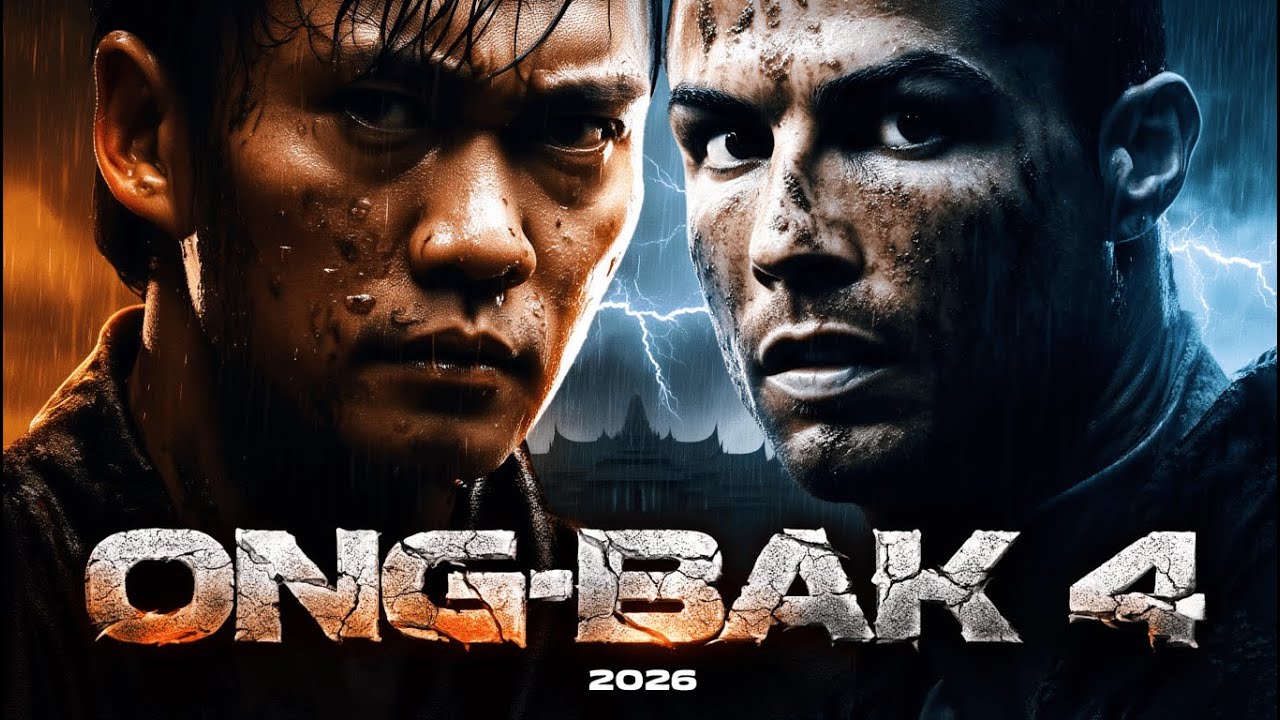
Into this arena steps Cristiano Ronaldo as Alejandro Cruz, a former elite athlete whose life collapsed under personal tragedy. Casting him is either inspired or reckless, depending on your tolerance for risk. The film makes the gamble pay off by leaning into his physical truth rather than asking him to mimic seasoned martial artists. Cruz moves like a man engineered for speed, and the contrast with Ting’s grounded Muay Boran creates genuine dramatic tension.

Action Choreography: The Language of the Body
If dialogue is sparse, the bodies speak volumes. Director and stunt team approach action as grammar rather than noise. Elbows land with intention. Knees are not flourishes, but punctuation marks. Tony Jaa remains a master technician, his movements economical and devastating. Ronaldo’s style is different: explosive, linear, almost mechanical. Their encounters feel less like fights and more like philosophical arguments settled through motion.
Importantly, the film keeps its promise: no guns, no gadgetry excess. The absence of shortcuts forces the choreography to carry narrative weight, and it does so with clarity and rhythm.
Performances
Tony Jaa as Ting
Jaa does not play Ting so much as inhabit him. Age has added gravity to his presence. He moves with restraint, and when he strikes, it feels earned.
Cristiano Ronaldo as Alejandro Cruz
Ronaldo is not asked to be subtle, and that is a mercy. His performance is physical storytelling. There are moments when emotion flickers through posture rather than speech, and those moments work.
Technical Craft
The cinematography favors clean framing over frantic cutting, allowing the audience to read movement and intent. The sound design emphasizes breath, impact, and footwork, grounding the spectacle in human effort. Editing resists excess, trusting the choreography to hold attention.
What Works
- Authentic, readable martial arts choreography
- A thematically coherent clash between old and new
- Tony Jaa’s disciplined, mature screen presence
- A surprisingly effective use of Ronaldo’s athleticism
What Holds It Back
- Supporting characters lack depth
- The global stakes occasionally feel abstract
- Some dramatic beats rely too heavily on symbolism
Final Verdict
Ong-Bak 4 is not interested in reinventing action cinema. It is interested in reminding us that the body, trained with purpose, remains the most compelling special effect of all. By pitting Tony Jaa’s spiritual precision against Cristiano Ronaldo’s explosive modernity, the film becomes a meditation disguised as a brawl. It may not convert skeptics, but for fans of grounded martial arts and clear cinematic intent, this is a ferocious and welcome return.
Rating: 9.2/10